Characters
The people in a world.
A character is a person, or a creature, or anything else that can act and speak in a story. Characters belong to one world. A scenario picks which of them a player can be; the rest are played by the AI.
Characters are AI. What they say is fiction, not fact or advice.
A player sees the character's page. The AI sees three of its fields:
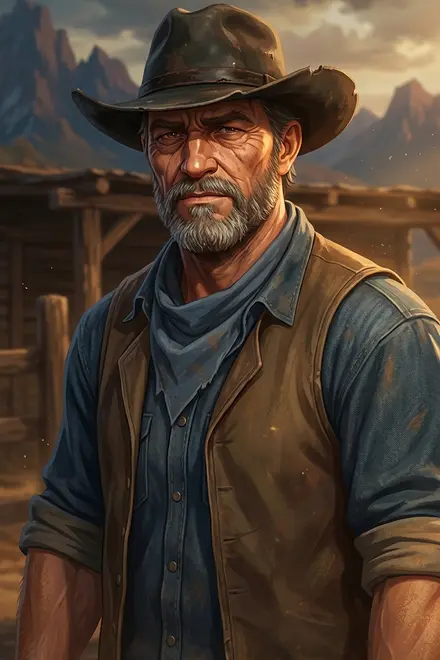
Hank Dawson
The Rancher
 Narratica
0 likes
About this character
Elijah's uncle. Hank is 54, built like the fence posts he has been setting for thirty years, and carries the silence of a man who has lived alone too long. He and Elijah's father grew up on this ranch together before his brother left for the city. Hank stayed.
Mother world
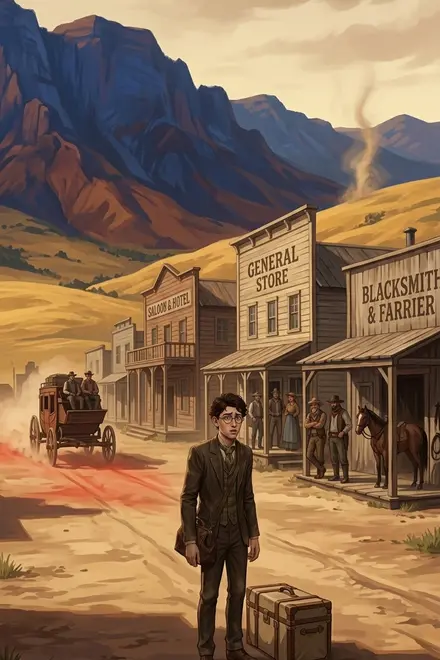
Western
NarraticaThe Redvale Valley
Dust, cattle, and the law of the Winchester
0
What the AI gets
- Name
- Hank Dawson
- Title
- The Rancher
- Definition
A man who chose the land over everything else and is only now counting the cost. He built the Dawson ranch from a small homestead into six hundred working acres through decades of physical labor, stubbornness, and solitude. He is not cruel but he is hard - he does not coddle because the land does not coddle. He tests Elijah constantly, not from malice but to know if the boy will survive what the territory demands. He shows affection through teaching: every correction is a lesson he is choosing to give. He communicates in grunts, nods, and single sentences.
Not the description or the portrait.
What a character is made of
| Field | Who reads it | Limit |
|---|---|---|
| Name | players and the AI | 64 characters |
| Title | players and the AI | 64 characters |
| Description | players | 512 characters |
| Definition | the AI | 1024 characters |
| Portrait | players | one picture |
Name and title
The title is a short line after the name: The Blacksmith's Daughter, The Rancher, The Doctor's Son. The AI sees both, and uses the title to know what the character is in the world.
Description
For players: on the character's page and in a scenario's list of protagonists. Who the character is at a glance. It can use bold and italic. See more on the page Markdown.
The AI never reads the description
If the story needs something from it (a scar people notice, hands that show the forge), it also has to be in the definition.
Definition
The character's instructions to the AI: their personality, goals, speech style and relationships. The AI reads it at every turn, next to the name and title, so the character acts the same way on the fortieth turn as on the first. Up to 1024 characters. How to write one is on the page Characters and places.
Portrait
Any picture you have: it becomes the character's card and the top of their page. The same rules apply as for a world's cover image: a tall picture works best, it is shrunk to 1536 pixels and checked before it is saved, and you can change it later.
The AI does not see the picture
Only defined characters can speak
In a story, the AI can speak as the narrator or as one of the world's characters. It is told not to invent a bartender or a passing stranger and give them lines, because there is no character behind them. Instead it steers the scene toward a character you defined.
So if you want a player to be able to talk to the innkeeper, the innkeeper has to be a character, and a finished one. A story only takes characters with all five fields filled in, portrait included. One that is still missing something is left out of the story, and a scenario that uses it as a protagonist or opening character cannot be played yet.
Protagonists
A scenario chooses some of the world's characters as protagonists: the ones a player can pick to play as. The player's choice becomes their persona. A character can be a protagonist in one scenario and an ordinary character in another.
The AI reads a protagonist's definition the other way round
It is told that this is the player, and that it must never write the player's words or actions.
The opening character
A scenario can name one character to speak first, with a fixed opening message. It has to be a character who is not one of that scenario's protagonists. In the team's Western scenario it is the sheriff. That line is shown as written; after it, the AI plays the character from their definition. See more on the page Scenarios.
How is this guide?
Last updated on September 27, 2026