Places
Locations inside a world.
A place is a location in a world: a tavern, a forge, a street, a ranch, a classroom, a ship. Places are optional, so a world with none can still be played, but a world with good places gets better scenes.
A player sees the place's page. The AI sees two of its fields:
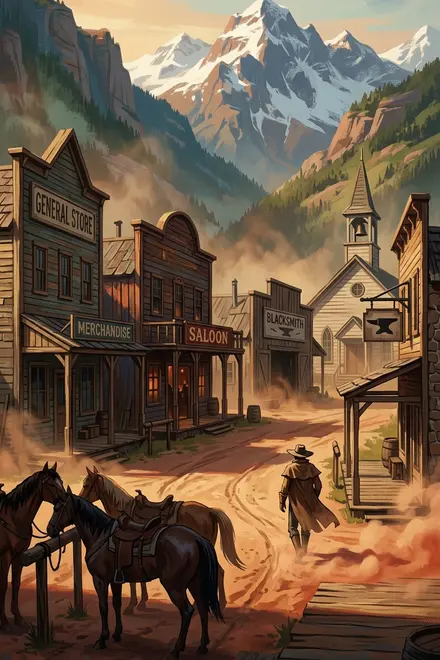
Redvale Main Street
 Narratica
0 likes
About this place
A single unpaved road lined with the buildings that make a frontier town functional: general store, saloon, blacksmith, sheriff's office, church-schoolhouse, and Doc Harlan's office above the barber. Horses are tied to posts along the street. Dust rises with every step.
Mother world
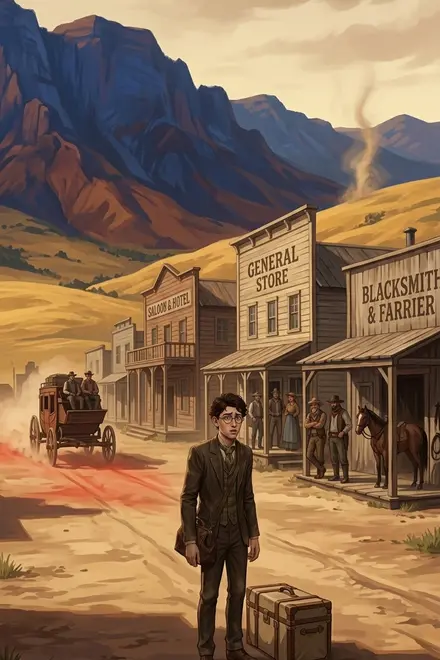
Western
NarraticaThe Redvale Valley
Dust, cattle, and the law of the Winchester
0
What the AI gets
- Name
- Redvale Main Street
- Definition
A single unpaved road lined with the buildings that make a frontier town functional: general store, saloon, blacksmith, sheriff's office, church-schoolhouse, and Doc Harlan's office above the barber. Horses are tied to posts along the street. Dust rises with every step. On Saturday evenings, the town gathers and for a few hours the loneliness of the territory recedes.
Not the description or the cover image.
What a place is made of
| Field | Who reads it | Limit |
|---|---|---|
| Name | players and the AI | 64 characters |
| Description | players | 512 characters |
| Definition | the AI | 1024 characters |
| Cover image | players | one picture |
Description
For players, on the place's page: what it looks like. It can use bold and italic. See more on the page Markdown.
The AI never reads the description
If the coals, the anvil and the smell of hot iron should reach a scene, they also have to be in the definition.
Definition
The place's instructions to the AI: the atmosphere, what happens here, who comes here. The AI has every finished place in the world in front of it at every turn, and when the story moves somewhere it uses the matching definition to describe the scene and decide what can happen there. Up to 1024 characters. How to write one is on the page Characters and places.
Cover image
Any picture you have: it becomes the place's card and the top of its page. The same rules apply as for a world's cover image: a tall picture works best, it is shrunk to 1536 pixels and checked before it is saved, and you can change it later.
The AI does not see the picture
Places are optional
A world is complete without places, and a scenario is playable without them. But when the player passes a turn, the AI is told to move the story on, often by taking the player to a place where one of your characters is. Add places where scenes will happen: the room the story opens in, the place the protagonist keeps coming back to, anywhere a character lives or works.
When a scene moves to a place you defined, the AI describes it from your definition every time; a place you did not define, it makes up from nothing. The place has to be finished, though: a story only takes places with all four fields filled in, cover image included, and leaves out the rest.
How is this guide?
Last updated on September 27, 2026