Stories
A play session, the copy of the world it runs on, and what it remembers.
A story is one playthrough of a scenario: you, as the protagonist you picked, and the AI as the narrator and everyone else. Later you will also be able to play as a persona of your own Coming soon. It starts when you press Begin adventure and it stays under Stories in the app, because nothing is deleted on its own.
You are chatting with AI characters. What they say is fiction, not fact or advice.
You see the chat. On every turn, the AI sees this:
The Doctor's Son
The Redvale Valley
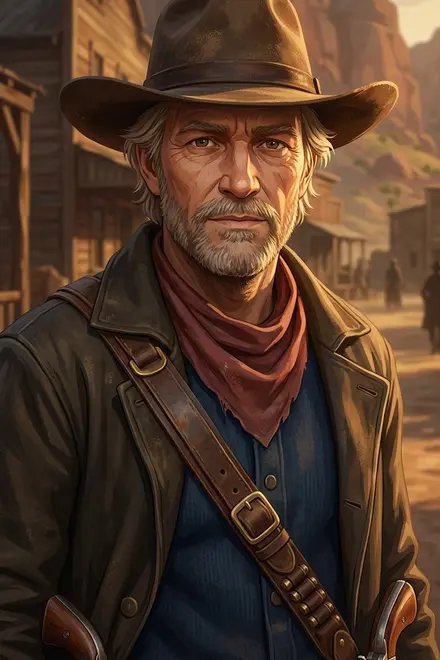
Tom Garrity
Sheriff
"You'd be Dawson's nephew. You've got your father's face - same jaw, same way of standing like you're thinking three things at once. I'm Garrity. Your uncle knows you're coming but he's not the type to meet a stage."
Elijah Dawson
The Doctor's Son
I set the bag down in the dust. "Elijah Dawson. Then I suppose I'll find the ranch myself, Sheriff."
Ask the way to the ranchAsk about my fatherSay nothing and wait
Write a message...
You are chatting with AI characters, not real people. Treat their responses as fiction, not fact or advice.
What the AI gets
- The world
- The Redvale Valley, name and definition
- Every character and place in it
- Characters with name, title and definition, places with name and definition, all from the story's own copy of the world
- Your persona
- Elijah Dawson, The Doctor's Son, name, title and definition, plus the rule that it never writes for you
- The story so far
- The last 20 turns in full, then up to 40 older moments the story finds relevant
Not the pictures, and not the messages older than twenty turns, unless the story looks them up as memories.
How a story runs
It takes a copy
When a story starts, it copies the world into itself
The world's definition, every character, every place, the scenario and your protagonist. The story runs on that copy from then on.
Editing a world does not change or break stories already running in it, and a story cannot see characters or places you add to the world later. If you want the new version, start a new story.
How it begins
The first message is the scenario's prologue, as the narrator. If the scenario has an opening character, their opening message comes second. Both are shown exactly as the author wrote them. Then the AI writes three suggested replies, and the story waits for you.
A turn
A turn is your message and the AI's answer. You write what your character does, says or thinks, in up to 1,024 characters. The AI answers as the narrator or as one character, in one short message of one or two sentences (three for a big scene change), and gives you three suggested replies.
The narrator describes; it never speaks a character's lines. A character speaks; a short action can sit in italics at the start or end. Those are the app's own rules for the AI, so every story reads the same way. You can write the same way; see more on the page Markdown.
Passing the turn
If you leave the message box empty, the send button becomes a fast-forward button, and pressing it hands the turn to the AI without a message from you. See more on the page Steering the story.
Suggested replies
Three short options under the latest AI message, written in your character's voice. Tap one to put its full text in the box, or ignore them and write your own. See more on the page Steering the story.
What it remembers
The AI sees the last 20 turns in full. Once a story is longer than that, older turns are stored as memories, and on each new turn the story looks up the ones that are most similar to what is happening now and adds up to 40 of them. So a name from the first evening can come back on the fortieth. See more on the page How memory works.
Fixing a turn
Hold a message to open its menu. You can copy any message, edit or regenerate the latest turn, and rewind the story to an earlier message. See more on the page Steering the story.
Rewinding removes everything after that point
The story's codex Coming soon
Each story will get a codex, a place inside the story where you can look up its summary and the story's own versions of its characters and places.
How is this guide?
Last updated on September 27, 2026