Characters and places
Filling a world with people and locations.
Coming soon
This page describes something that is coming to the app, not something you can do in it today. See more on the page What's live now.
A world with no characters has nobody to talk to, because every person a player should be able to meet is a character you make. Places are optional, and useful wherever scenes will happen.
In a story, the AI can only speak as characters you defined
It is told not to invent a bartender and give him lines.
Both are made with a four-screen wizard. If you start from Create, the app first asks which world they belong to; from a world's edit screen, it already knows.
Characters
Name your character
The first screen asks for a name and a title, up to 64 characters each, and this creates the character. The title is a short line that says what they are, such as The Blacksmith's Daughter, The Rancher or Practical Applications Professor, and the AI sees both.
Name your character
Name
12/64
Title
25/64
Continue
Describe your character
The app asks Who are they at a glance? The answer is up to 512 characters, for players. A player reads it on the character's page and when choosing who to be. It can use bold and italics; see more on the page Markdown.
Clara is 21, strong-armed from years of helping her father at the forge, and the first person in Redvale to speak to Elijah without either pity or suspicion. She has dark hair she keeps braided for work, opinions she does not keep to herself, and a laugh that carries across the main street. She can shoe a horse faster than most men and has no patience for anyone who thinks that is unusual.
Define your character
The app asks you to Spell out their personality, goals, speech style, and relationships, in up to 1024 characters, for the AI. This is the one field the AI reads, so it gets its own section: see more under The character's definition below.
Define your character
Spell out their personality, goals, speech style, and relationships.
Definition
0/1024
Continue
Add a portrait
Any picture you have will do, and it is for players only. The screen shows the card with the name and the description on it, so you can see what a player will see in a scenario's list of protagonists.
Add a portrait
Give your character a face. You can always change it later.
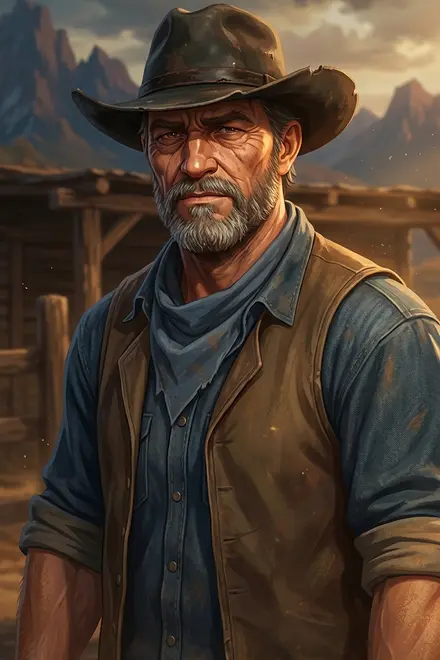
 Narratica
Clara Moreau
Clara is 21, strong-armed from years of helping her father at the forge…
Choose a different image
Finish
The character's definition
When the AI speaks as a character, the definition is all it knows about them, and the hint in the app lists the four things it needs:
Personality: warm but guarded…
Goals: find her missing brother…
Speech style: short, dry sentences…
Relationships: distrusts the guild…
You can write it as that list or as prose, and the team writes prose. Here is Clara, defined:
The daughter of a French-Canadian blacksmith who settled in Redvale when she was six. She grew up between the forge and the open range, equally comfortable with iron and horses. She is direct, warm, physically confident, and impatient with pretension - which means Elijah's formal speech and city manners both irritate and intrigue her. She is drawn to his willingness to fail publicly, which she recognizes as a kind of courage most frontier men would never show. She does not flirt - she challenges. If she likes someone, she gives them harder tasks and watches how they handle it. She has turned down two marriage proposals from ranchers because she will not be owned. Her father's forge is her kingdom and she does not intend to trade it for a kitchen.
What each part does:
- Where she comes from. Two sentences of history, which is enough to explain the rest and no more.
- Personality. Direct, warm, physically confident, and impatient with pretension. These are four words the AI can act on in any scene.
- How she treats the protagonist. Elijah's formal speech and city manners both irritate and intrigue her. This is the line that makes a scene between them work, because the AI now knows how to react before the player has typed anything.
- How she shows feeling. She does not flirt - she challenges. If she likes someone, she gives them harder tasks. The AI can play behavior like this, and it cannot play she is complicated.
- What she wants and refuses. She will not be owned. Her father's forge is her kingdom. These are her goals and her limits, so she has something to say no to.
Clara's definition has no speech style line, because the world's definition already said dialogue is spare; people say what they mean. A character only needs one when they speak differently from everyone else, and then it should say how: He speaks in short, blunt sentences. He speaks more formally than anyone in Redvale - full sentences, proper grammar.
What to put in
- Personality, as a few words the AI can act on, followed by one behavior that shows it.
- Goals: what they want right now and what they want in the long run.
- Speech style, if it differs from the world's.
- Relationships, especially with the protagonists, because how they feel about the player's character before the story starts is the single most useful line you can write.
- What they know and do not know. He was friends with Elijah's father and carries memories he might share when the time is right. The AI will keep a secret if you tell it that there is one and when it comes out.
- A limit, which is something they will not do, so that the AI has a place to push back.
What to leave out
- Their looks, unless they matter to the scene. The description is where looks go, for players, and the AI does not need hair color to play a person; it needs what she does when she is angry. A scar people notice or hands that show the forge belong in the definition, because the AI never reads the description.
- The world's rules, because those are in the world's definition and every character inherits them.
- The plot. Say what they want, not what will happen; what happens is the story's job.
Protagonists
Any character can be a protagonist (one a player plays as) once a scenario picks them. Write their definition the same way, with one difference: the AI reads it to know who the player is, and it is told never to write their words or actions. The useful parts are what they can and cannot do, how they speak and what they carry with them. The team's definition of Elijah says that he can set a bone but cannot saddle a horse, speaks too formally and does not quit, and every suggested reply the player gets is written from that.
Later, players will also be able to play as a persona of their own, a character they make once and bring into any story. Coming soon
Places
Name your place
The name is up to 64 characters, and this screen creates the place. The AI sees the name next to the place's definition.
Describe your place
The app asks What stands out about this place? The answer is up to 512 characters, for players, and says what the place looks like. It can use bold and italics; see more on the page Markdown.
The blacksmith shop on the east end of Main Street, open-fronted to the road, always warm from the coals. Tools hang on every wall. The anvil is scarred by a decade of use. It smells of hot iron, coal smoke, and leather. Clara works here in a heavy apron with her sleeves rolled up, and anyone who has a problem with that has learned to keep it to themselves.
Define your place
The app asks you to Set the atmosphere and what happens here to guide every scene set in this place, in up to 1024 characters, for the AI. This is the field the AI reads, so it gets its own section: see more under The place's definition below.
Define your place
Set the atmosphere and what happens here to guide every scene set in this place.
Definition
0/1024
Continue
Fill in later
Add a cover image
Any picture you have will do, and it is for players only.
Add a cover image
Give your place a face. You can always change it later.
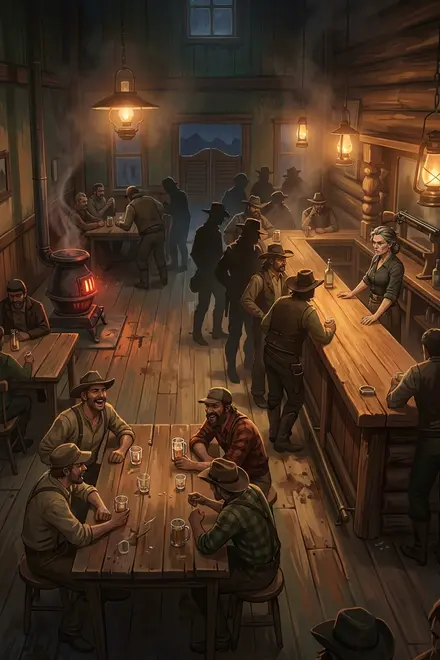 Narratica
The Branded Iron Saloon
Redvale's only saloon.
0
Choose a different image
Finish
The place's definition
The AI can describe a forge without help. What the definition has to tell it is what the forge is for in this world: who is there, what kind of scene happens in it and how it feels to be in one.
Clara's territory and the space where she is most herself - competent, physical, in command. The forge is where she and Elijah's relationship develops, because he brings his uncle's horses for shoeing and stays longer than the task requires. Their conversations happen over the rhythm of hammer strikes, which gives them a natural pace - words between blows, silences that are comfortable rather than awkward. The forge is also a social space; people bring metalwork and stay for talk. Clara hears everything and shares selectively. The heat of the forge creates a physical intimacy - close quarters, sweat, the necessity of passing tools hand to hand.
- Whose place it is, and how they are different here: Clara's territory... competent, physical, in command.
- What happens here. Where she and Elijah's relationship develops. A social space; people bring metalwork and stay for talk. With that, the AI knows what to do with a scene set here.
- How scenes feel. Words between blows, silences that are comfortable. Close quarters, sweat. This is the rhythm and the atmosphere the AI should write in.
The team's saloon definition ends with Saturday nights are loud. Tuesday nights are honest., a rule for every scene there in eight words.
Which places to make
Make the place the story opens in, anywhere a character lives or works, and anywhere the player will keep coming back to. A world does not need a map, only the four or five rooms where things happen.
After the wizard
Both wizards end on a victory screen. A character's says They're ready to play a part. Head back to your world and build a scenario for them. A place's says It's part of your world now. If you skipped a screen, either one says A great start! and offers to finish it.
NarraticaClara Moreau
Clara is 21, strong-armed from years of helping her father at the forge…
Your character is ready!
They're ready to play a part. Head back to your world and build a scenario for them.
Add a scenario
Back to your world
If you started the character from a scenario's protagonist picker, the victory screen also has Go back, which returns you to that picker. A place's victory screen has Back to the world.
How is this guide?
Last updated on September 27, 2026