Worlds
The setting that holds everything else together, and the rules the AI follows inside it.
A world is a setting. Its characters, places and scenarios all belong to it, and nothing crosses between worlds. A character you wrote for one world cannot appear in another.
A player sees the world's page. The AI sees two of its fields:
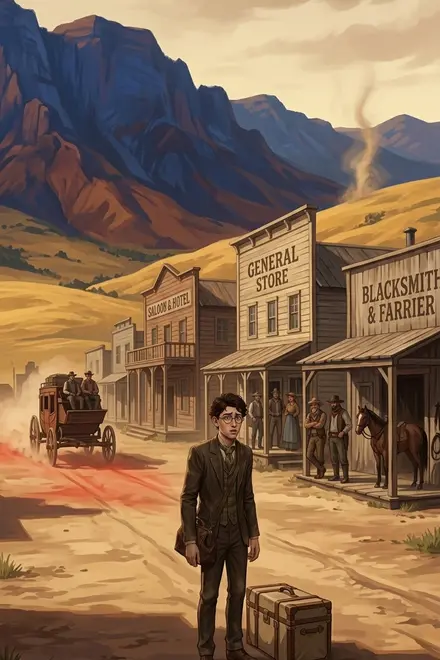
Western
The Redvale Valley
Dust, cattle, and the law of the Winchester
 Narratica
0 likes0 chats
Play
About this world
Wyoming Territory, 1882. The town of Redvale sits between the Bighorn Mountains and the open range - cattle outnumber people ten to one, and the nearest telegraph is a two-day ride east.
Scenarios2
 Narratica
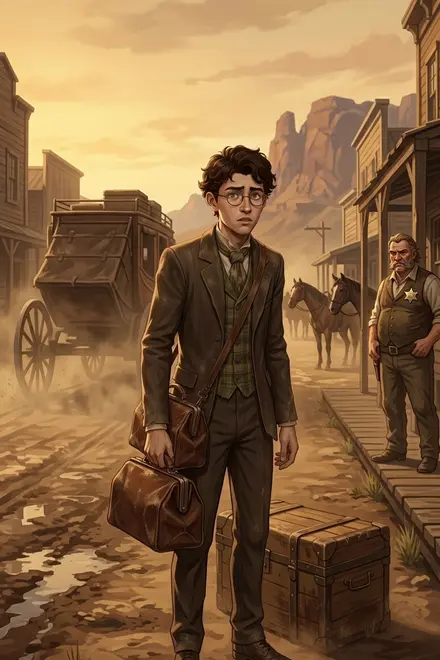
The Doctor's Son
The stagecoach just left and the dust tastes…
00
 Narratica
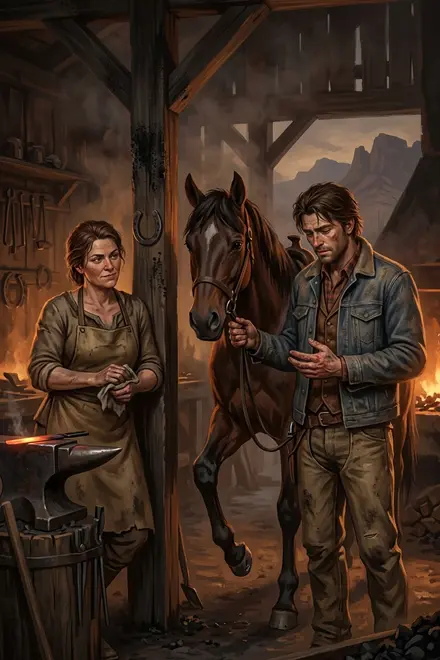
Iron and Asking
Three weeks in Redvale and your body…
00
What the AI gets
- Name
- The Redvale Valley
- Definition
You narrate a Western drama set in 1880s Wyoming Territory. Tone: spare, honest, grounded in the physical reality of frontier life - dust, heat, animal sweat, the weight of a fence post, wind across open grass. Redvale is a real frontier town: small enough that everyone knows everyone, tough enough that survival requires cooperation. Ranch life must be accurate - cattle work, horse breaking, fence mending, seasonal rhythms. The landscape is vast, indifferent, beautiful, and capable of killing the careless.
Not the subtitle, the setting, the description or the cover image.
What a world is made of
A world has six fields. The AI reads only the name and the definition; everything else is for players. You can skip some steps in the wizard with Fill in later, but a world is finished only when all six fields are filled in, and a world that is not finished cannot be played.
| Field | Who reads it | Limit |
|---|---|---|
| Name | players and the AI | 64 characters |
| Subtitle | players | 64 characters |
| Setting | players, and the app | one from a list |
| Description | players | 1024 characters |
| Definition | the AI | 2048 characters |
| Cover image | players | one picture |
Name and subtitle
The name is on every card and at the top of every story. The subtitle is one line under it, for the card: Dust, cattle, and the law of the Winchester. The AI sees the name, while the subtitle is for players only.
Setting
One of ten: Fantasy, Urban fantasy, Sci-fi, Cyberpunk, Dystopia, Steampunk, Western, Mythology, Historical or Urban. It is shown on the card and picks the colors the app uses for the world, such as the placeholder you see before there is a picture. The AI does not see it, so a Western world still needs its definition to say it is a Western. The list is fixed, so a world that fits none of the ten takes the closest one and says the rest in its definition.
Description
The long text on the world's page, for a player who is deciding whether to play. It can use bold and italic. See more on the page Markdown.
The AI never reads the description
If the story needs something from it, it also has to be in the definition.
Definition
The world's instructions to the AI: the rules, the tone and the lore of every story set here. The AI reads it at the start of every turn, before anything else about the scene, so it is the field that decides how stories go. Up to 2048 characters. How to write one, sentence by sentence, is on the page Building a world.
Cover image
Any picture you have: it becomes the world's card and the top of its page. Cards are tall, so a tall picture works best. The app shrinks it to 1536 pixels on the longer side, checks it, and refuses one that is explicit or unsafe. You can change it later.
The AI does not see the picture
A world cannot be played on its own
A world holds its characters and places, and its scenarios point at it. The app expects the world first, then the rest.
When you delete a world, everything in it goes with it
To be played, a world needs at least one playable scenario. A world with every field filled in and ten characters is finished, and still nobody can play it until it has a scenario. See more on the page Path to playable.
A story takes its own copy of the world when it starts
Changing the definition later changes the next story you start, while the one already running keeps its copy. See more on the page Stories.
How is this guide?
Last updated on September 27, 2026